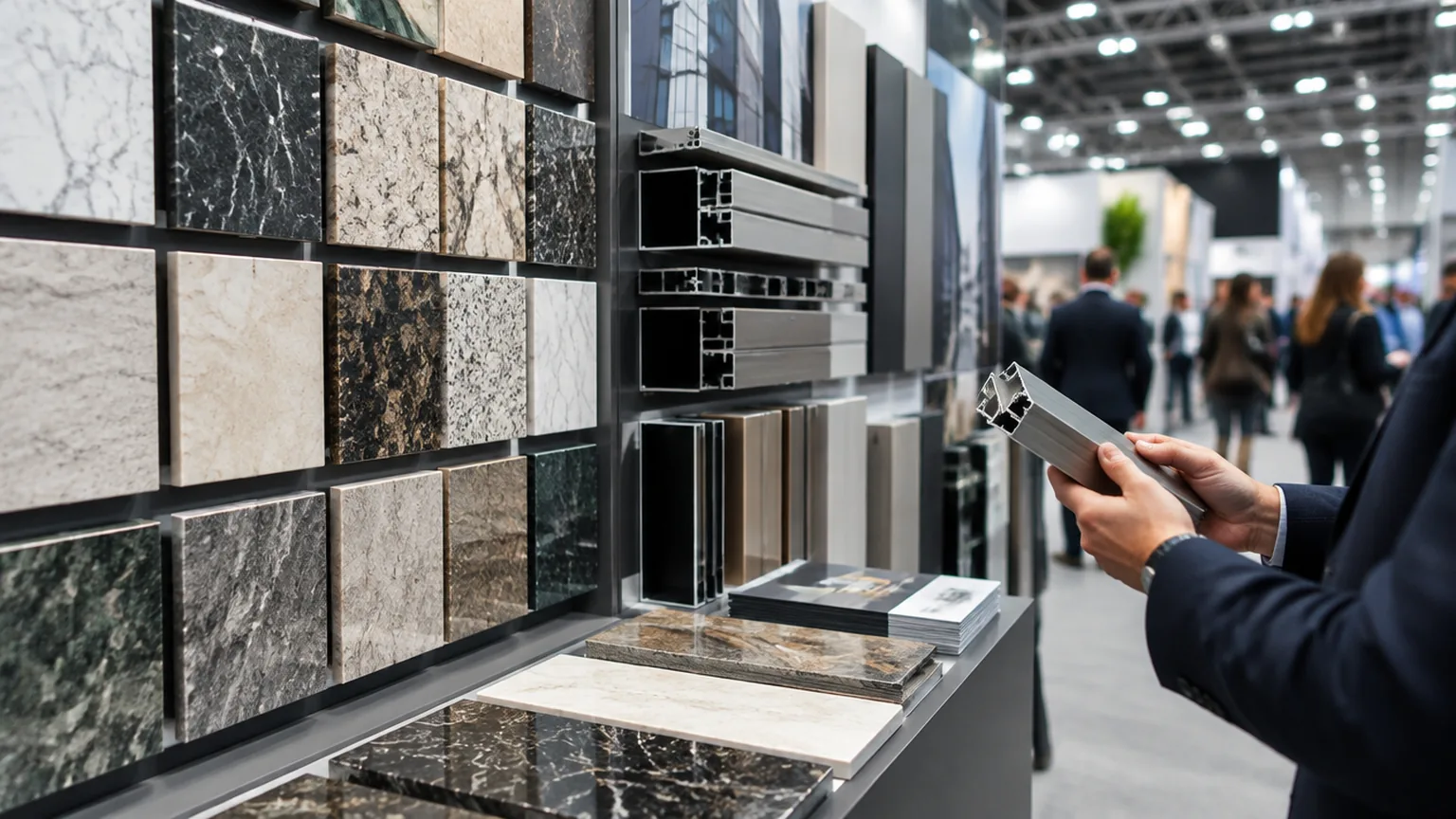
Why industrial stands are the hardest to photograph
Machinery is dark, large and reflective, and halls are lit from above. A grey pump or a black control cabinet under cool hall light photographs as a shape without detail; painted panels and glass guards reflect the hall's lighting grid as white bars; a six-metre machine does not fit in a shell scheme frame; and a running demo is loud enough that an interview recorded beside it is unusable. The method is to split the day. Before doors, the hardware is photographed as the catalogue would show it, with controlled light. During the day, the machine runs and the engineers consult, and the crew works from the edge with longer lenses. In the quiet hour, the interview.
Hardware clean before doors
Between 09:00 and 09:55 the machine, the sample wall, the vehicle, the cut-away and the control panel are each photographed as the catalogue would show them. Controlled light lifts dark metal: a large soft source from one side and a reflector from the other give a black housing its edges back. Reflections on glass guards and painted panels are managed by angle and a polarising filter, and by switching off the stand's spotlights for the frame where they show. A full machine takes six to ten frames from four angles; then the details that matter to the buyer, the interface with the screen on, the joint, the coupling, the finish, the nameplate with the model number legible, each with a macro or a short telephoto. A stand with three machines and a sample wall fills the forty minutes exactly; a stand with eight needs priorities agreed the day before. Screens and HMIs are set to a representative page, not a start-up logo. Vehicles on an Automechanika stand get the polariser at three-quarter angles, wheels turned, spots dimmed.
In motion
Running machinery is filmed at shutter speeds that keep motion clean rather than smeared, usually a 180 degree shutter at 25 or 50 frames per second, with a higher frame rate where slow motion of a cut, a pour or a press stroke tells the story. Photographs use the opposite logic: a slightly longer exposure, a fifteenth or an eighth of a second on a tripod, so the rotating part blurs and the housing stays sharp, which is the one frame that says this machine is running. Safety distances are respected: the stand team controls the demo and the crew stays outside the marked area. Demos at Big 5 Global and Middle East Energy usually run on a schedule, every hour or half hour: the first demo of the day is for the wide and tripod frames, later demos for details and visitors' reactions.
Scale and detail
A buyer needs to know how big the machine is, and a photograph without a reference tells them nothing. The crew puts a person in the wide frame, an engineer at the control panel or a visitor at the sample wall, and makes at least one frame from a low angle that gives the machine its height. On outdoor exhibits at Big 5, on the plaza outside the halls, the wide frames are made early in the morning or after sunset, because midday sun gives contrast no camera can hold. The detail frames go the other way: the macro lens on the weld, the surface finish, the labelling, the connector, with a scale reference where it helps. Distributors use the wide frame with the person in it more than anything else.
Engineers and interviews
Consultations at the machine are photographed from the edge, over the engineer's shoulder, so the visitor is not identifiable unless they have agreed. The crew records the technical interview with a lavalier microphone clipped close to the speaker's mouth, so the hall stays in the background, in a slot away from the stand's own demo and from stage sessions nearby, usually 16:30 to 17:30. Six to eight minutes recorded, three or four questions on what the machine does, what makes it different, what the buyer gets in service and spares, and who to contact; cut to 60 to 90 seconds and subtitled in English and Arabic for the distributor network across the Gulf, Africa and South Asia. If the engineer must stand at the machine, the demo is paused for the eight minutes.
A worked example: a pump manufacturer at ADIPEC
A pump and valve manufacturer has a 100 square metre stand at ADIPEC at ADNEC with two pumps on plinths, a cut-away valve, a sample wall of seals and a live flow-loop demo every hour. Day one, 09:00: the two pumps and the cut-away with the soft light and polariser, eight frames each; the sample wall; the HMI set to the flow screen. 09:45: team portraits. 10:00: the first flow-loop demo, tripod frames at an eighth of a second for the impeller and the wide with the engineer. 11:30: the ministerial walkthrough passes the stand, covered as described in the VIP visit guide. 13:00 to 16:00: consultations from the edge, two more demos for details and reactions. 16:40: the chief engineer's interview with the lavalier, demo paused. The evening link carries 80 edited photographs sorted into hardware, demo, visitors and team; days two and three add a distributor interview and the recap film.
What goes wrong, and what we need from you
- The machine is not running on day one. Fix: confirm the demo schedule at the walk-through and plan the running frames for when it is live.
- Reflections of the hall grid in every panel. Fix: the polariser, the angle, and the stand's spots dimmed for the clean frames.
- Interview beside a running demo. Fix: the quiet slot and the lavalier; if the demo cannot stop, the interview moves to a corner of the stand away from it.
From the client we need the machine list in priority order, the demo schedule, confirmation of what may and may not be photographed (some stands have components under NDA), the engineer's eight minutes, and a named approver. What arrives: the clean hardware set and the day's coverage the same evening, running-machine clips, interviews with subtitles in English and Arabic, a recap film in 16:9 and 9:16, two revision rounds and usage rights for your own channels. See the construction hub and the energy hub.
Quick answers
Can you film the machine running?
Yes, at shutter speeds and frame rates that keep the motion clean, with the stand team controlling the demo and the crew outside the safety area.
How do you handle hall noise in interviews?
A lavalier microphone close to the speaker and a slot away from demos and stage sessions, usually the last hour of the day. The hall stays audible but in the background.
Do you photograph outdoor exhibits at Big 5?
Yes, on the outdoor area early in the morning or after sunset, when the light is soft enough to hold the detail.
Can you photograph components that are confidential?
Only what you clear. Tell the crew at the walk-through which parts are under NDA and they stay out of frame or are photographed for internal use only.
How many photographs of a machine do we get?
Six to ten edited frames per machine plus the details, so a stand with three machines typically has 30 to 40 hardware photographs before the visitor coverage.
Questions about your show?
Send show, hall and stand number and what you need. You get a fixed quote within 24 hours.
info@lumiq.mediaLUMIQ Media & Marketing FZCO · Building A1, Dubai Digital Park, Dubai Silicon Oasis, Dubai
We reply within 24 hours. During a show week, WhatsApp is fastest.